Office Reception Table – Where First Impressions Begin (≈700 words)
The moment anyone walks into an office building, hotel, or commercial complex, their first point of contact is not the manager or the CEO—it is the reception area. And at the heart of that area sits the office reception table, quietly shaping the visitor’s first impression. From the moment a client steps inside, the reception table tells them whether this is a serious, organized setup or a temporary, throw‑away arrangement. For commercial projects, a well‑designed office reception table is not just furniture; it is part of the brand’s face.
Why the reception table sets the tone
In corporate offices, co‑working spaces, residential complexes, and commercial buildings, the reception is where guests sign in, employees pick up ID cards, and delivery staff are directed. A good office reception table turns this functional zone into a warm, professional welcome point. It should:
- Look neat, clean, and inviting.
- Offer enough surface for logs, tablets, and visitor passes.
- Provide storage for keys, envelopes, and small office supplies.
For project managers and facility heads, a properly designed reception table reduces chaos at the entrance. Guests feel welcomed, staff feel supported, and the space looks intentional instead of patched together.
Designed for real‑life commercial use
A reception table in a commercial project is not a decorative piece; it is a working station that handles daily traffic. In large office complexes, dozens or even hundreds of people enter and exit every day. The table must be strong enough to handle:
- Constant use by receptionists, security staff, and visitors.
- Frequent cleaning and wiping down without showing scratches or stains.
- Cables for computers, phones, and card‑swipe systems hidden neatly under the surface.
Many modern office reception tables come with built‑in cable management grommets, small drawers, and lockable compartments so documents and valuables stay secure. This practical design makes the front desk easier to manage and keeps the lobby looking tidy throughout the day.
Ergonomics and comfort for staff
While visitors see the top of the table, the reception staff spend hours sitting behind it. A good office reception table should balance looks with comfort:
- The right height so that the receptionist can work comfortably at a computer or laptop.
- Enough legroom so they can move without bumping into the desk.
- A layout that allows easy access to printers, phones, and storage units without cluttering the counter.
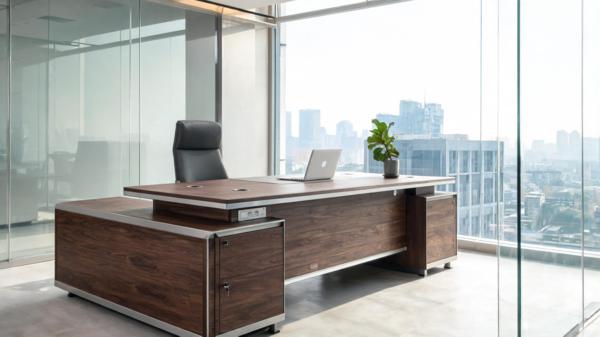
For corporate offices and large complexes, some reception tables are designed as L‑shaped or U‑shaped counters so staff can move around the desk freely while still keeping the main counter visible to visitors. This flexibility improves efficiency and makes the reception area feel more open and professional.
Durable, long‑lasting material choices
Commercial projects are different from homes. The reception is one of the most heavily used areas, so the table must be built to last. A well‑made office reception table typically uses:
- Strong engineered boards or solid‑wood frames that resist wear and tear.
- Durable, scratch‑resistant finishes that stay cleanable and do not chip easily.
- Stable construction so the table does not wobble even when loaded with equipment.
For offices in Delhi‑NCR and other humid climates, many manufacturers also use moisture‑resistant materials and coatings so the table does not swell or warp over time. This durability means fewer replacements and lower long‑term costs for the project.
Aesthetic that matches your brand
The reception table is often the first “visual anchor” of the building. It should complement the overall interior theme and brand language. Modern office reception tables can be:
- Sleek and minimal, using light colours and soft edges for a contemporary look.
- Classic and formal, using darker wood tones and simple lines for a traditional corporate feel.
- Custom‑branded, with integrated company logos, engraved panels, or colour‑coded fronts.
For large office complexes or multi‑tower projects, using the same style of reception table across all buildings creates a unified, professional image. Whether it is a high‑rise office tower, a residential society, or a co‑working space, a consistent reception design helps people recognize the space as part of the same brand family.
Helping staff, visitors, and management
For visitors, a good reception table means having a clear, organized place to sign in and wait. For staff, it means having a clean, functional workspace that supports their daily routine. For facility managers and project heads, it means:
- Easier maintenance and cleaning.
- Fewer breakdowns and repair requests.
- A professional lobby that enhances the value and image of the building.
In commercial complexes where multiple companies or tenants share the same building, a well‑designed reception table also helps receptionists manage different visitor flows, deliveries, and security checks smoothly.
Building long‑term value for your project
Once a project chooses a reliable office reception table manufacturer, they often return for future phases. The same team that designed the reception for the first tower can extend the same layout, material, and finish to additional blocks, ensuring the entire complex looks unified. This consistency helps tenants and visitors feel that the building is well‑planned and professionally managed from day one.
In short, the office reception table is where the first impression begins. When it is well‑designed, durable, and aligned with your brand, it quietly boosts the professionalism, comfort, and efficiency of your entire commercial project.
Keywords